The 15-Minute City: The Urban Model Redefining Life at Pride Canning
An analysis of the concept that transformed global urban planning and how Pride Canning implements it to create more human, efficient, and sustainable communities.
From Academic Concept to Urban Reality
In 2016, the French-Colombian urbanist Carlos Moreno presented a model to the scientific community that would change the way cities are conceived: la ville du quart d'heure (the fifteen-minute city). His proposal, published in the IEEE International Smart Cities Conference, called for a radical reorganization of urban space in which every resident could access six essential functions —housing, work, commerce, healthcare, education, and recreation— within a maximum radius of 15 minutes on foot or by bicycle.
What began as an academic theory became public policy when the mayor of Paris, Anne Hidalgo, adopted the model as the centerpiece of her 2020-2026 government plan. Today, cities such as Melbourne, Milan, Portland, Bogotá, and Barcelona are implementing variations of this concept.
The Crisis That Accelerated the Change
The COVID-19 pandemic acted as an unexpected catalyst. According to a study by the MIT Senseable City Lab (2021), people rediscovered the value of proximity during lockdowns:
- 78% of those surveyed placed greater value on being close to shops and services
- 64% considered moving to areas with better access to green spaces
- 52% prioritized the possibility of working close to home
Deloitte's "The Future of Cities" report (2022) concluded that the pandemic accelerated by 10 years the adoption of urban development models based on proximity and mixed uses.
The Six Pillars of the Model
Carlos Moreno's theoretical framework establishes six fundamental urban functions that must be accessible in close proximity:
1. Living Quality housing with access to nature and shared spaces that foster community life.
2. Working Distributed workspaces that eliminate the need for long daily commutes.
3. Supplying Everyday shops and services that meet basic needs without depending on the car.
4. Caring Accessible physical and mental health infrastructure, including sports facilities and green areas.
5. Learning Educational institutions at all levels integrated into the urban fabric.
6. Enjoying Spaces for recreation, culture, and social gathering that strengthen community bonds.
International Evidence
The model is more than just theory. Implementation studies show concrete results:
Paris, France (C40 Cities Report, 2023)
- 22% reduction in car trips
- 35% increase in bicycle use
- 18% improvement in residential satisfaction indices
Melbourne, Australia (Plan Melbourne 2017-2050)
- Goal: for 70% of new jobs to be located in local activity centers
- AUD 1.8 billion investment in proximity infrastructure
Bogotá, Colombia (Planning Secretariat, 2024)
- Implementation of "Life Centers" in 20 localities
- Average reduction of 45 minutes per day in travel times
Pride Canning: A Masterplan Designed Around 15 Minutes
Pride Canning did not adapt the concept after the fact: it was conceived from the outset as an ecosystem of proximity. Each component of the masterplan responds to one or more pillars of the model:
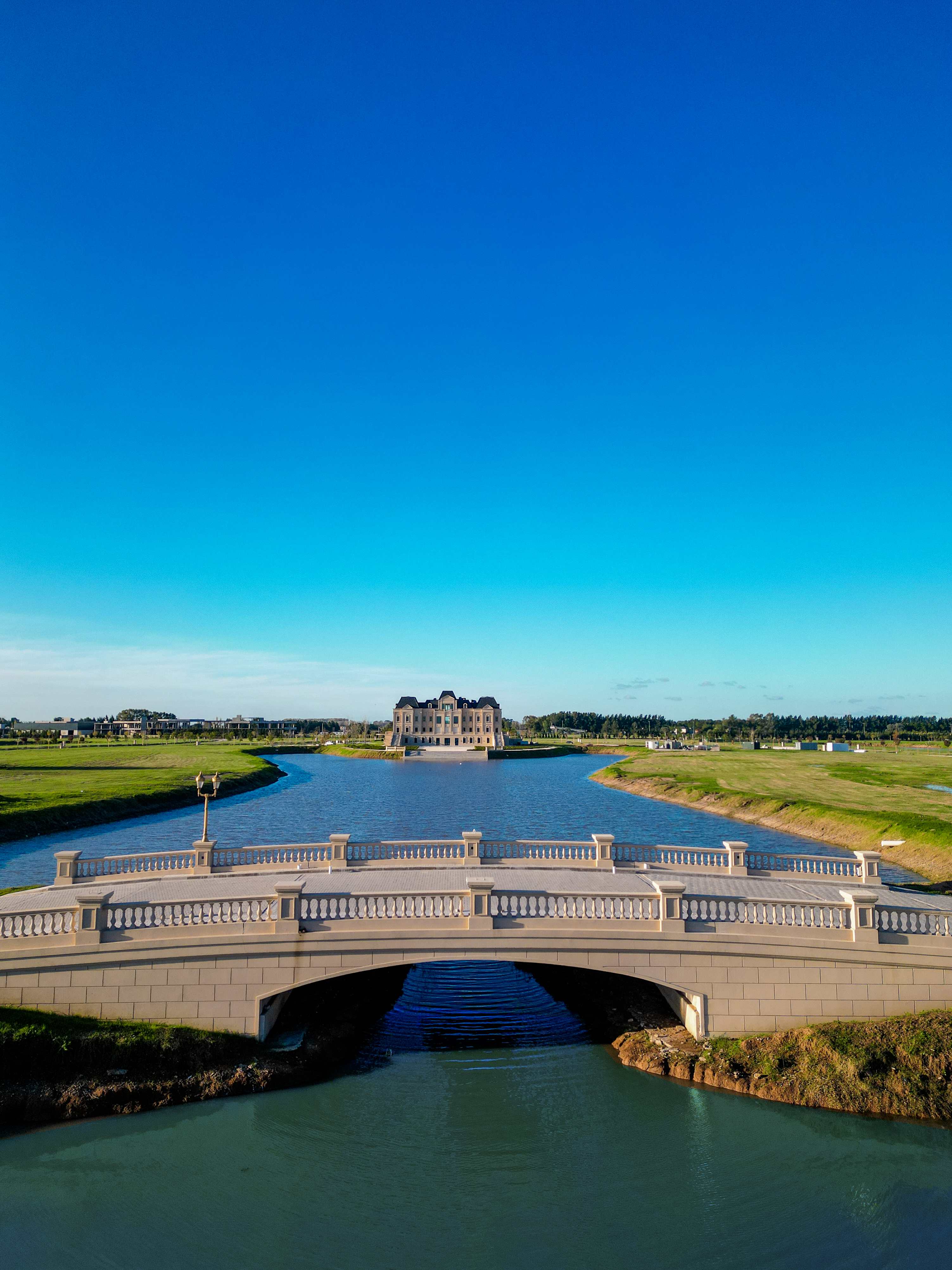
Living — Pride Canning 185 hectares with 750 premium residential lots, 20 navigable lagoons, forested trails, and an international-class Club House as the social epicenter. Controlled density guarantees privacy without sacrificing community life.
Working — Pride Canning Offices 2 corporate towers with 80 AAA offices. Designed for professionals, studios, and companies that choose to eliminate the commute without giving up first-class infrastructure. Each building includes +1,000 m² of commercial base and private parking.
Supplying — Pride Canning Center +20,000 m² of commercial space distributed across 100 stores: dining, retail, professional services, supermarket, pharmacy, and everything needed for daily life. 1,000 parking spaces ensure accessibility for residents and visitors.
Caring — Comprehensive Wellbeing SportClub with a fully equipped gym, pool, and guided activities. Aerobic and running circuits along natural trails. Lagoons for kayaking and paddleboarding. The design prioritizes movement and contact with nature.
Learning — Educational Ecosystem Less than 10 minutes away: Grilli Canning, Saint Mary's International College, Humanitas, South Creek School, and Instituto Canning. The area has consolidated an educational offering spanning from early years to secondary school.
Enjoying — Bela Padel Center Fernando Belasteguín's first official center in Argentina: 9 professional courts, a micro-stadium for 1,500 spectators, a Pro Shop, and an academy. Elite sport integrated into the development.
The Economic Value of Proximity
Beyond quality of life, the 15-minute model has direct implications for real estate value:
According to the "Walkability and Property Values" report by the Urban Land Institute (2024):
- Properties in mixed-use developments appreciate on average 18-25% more than equivalent single-use developments
- Proximity to shops and services adds between USD 15 and USD 30 per square foot to resale value
- Selling times are reduced by 40% in highly walkable developments
For the investor, Pride Canning represents not only a place to live, but an asset designed to capture the dominant urban planning trend of the coming decades.
Conclusion
The 15-minute city has ceased to be an urban utopia and has become the standard of the world's most sophisticated developments. Pride Canning brings this concept to life at the heart of the southern corridor of Buenos Aires: an ecosystem where residence, work, commerce, wellbeing, education, and entertainment coexist in perfect proximity.
It's not about having everything nearby. It's about reclaiming something cities lost: time to live.